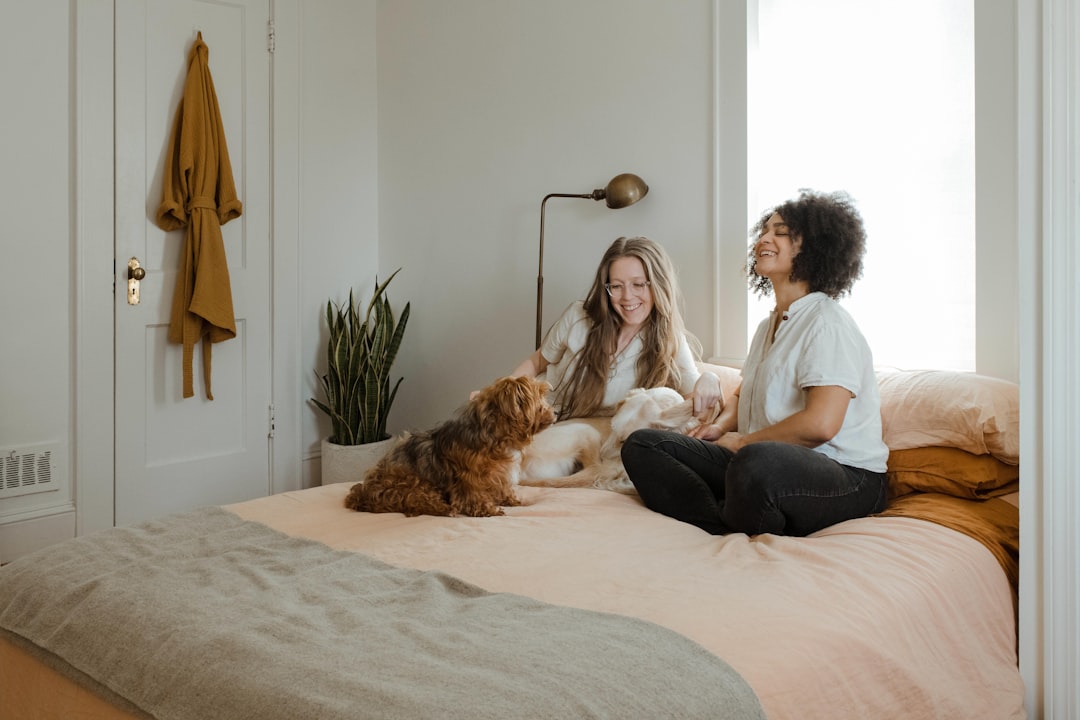
Pet companionship is less about having the perfect routine and more about building a life that both people and animals can actually live inside. I keep coming back to that idea because so many of the small problems people call pet problems are really rhythm problems. The leash by the door, the food bowl in the wrong place, the too-quiet evening, the rushed morning, the ignored signal at the end of a long workday. Those things add up.
This article is meant to be practical. I want to look at what makes a home feel steady for a dog, a cat, or a smaller pet, and how to shape a daily rhythm without turning life into a spreadsheet. If you want more articles like this, you can always browse the JoelLives home page.
Good Pet companionship is not dramatic. It is built in repeated moments that feel ordinary while they are happening. A glance, a short walk, a clean water dish, a quiet return after work, a spot on the couch that belongs to no one and everyone. That is where trust tends to live.
Pet companionship starts with a daily rhythm
The easiest way to understand Pet companionship is to think in terms of rhythm instead of rules. Pets do not need every hour planned out, but they do respond to patterns. They notice when meals appear at roughly the same time. They notice whether mornings are rushed or calm. They notice whether a walk, a play session, or a bit of couch time usually shows up before the day ends. That repetition becomes a map.
If I had to boil a useful daily rhythm down to a few anchors, I would start here. One anchor in the morning. One in the middle of the day, even if it is brief. One in the evening. Those anchors do not need to be grand. A five-minute training review, a tidy litter box, a short outdoor break, or a slow brush can matter more than a big burst of attention that happens once in a while and then disappears.
The point is not perfection. It is predictability with room for real life. A pet that knows roughly when connection is likely to happen usually settles faster. A person who knows what the animal expects is less likely to feel guilty every time work gets busy. The relationship becomes easier to live with because it has a shape.
A simple test helps here. If your pet’s best moments happen only when you are trying very hard, the rhythm is probably too fragile. If your pet seems calmer because the day has a few familiar checkpoints, you are on the right track. That is the difference between a bond that depends on mood and a bond that can handle ordinary life.
Pet companionship is really communication
People often talk about pets as if they are mysterious, but most of the time they are simply communicating in a language we have not paid enough attention to. Pet companionship gets stronger when you start noticing patterns instead of guessing. A cat that hides every time guests arrive is not being difficult for sport. A dog that circles the door before the usual walk time is not trying to run the household. A rabbit that thumps, freezes, or retreats is giving you information. The message may be subtle, but it is there.
What helps most is to watch for context. One action means one thing in one setting and something else in another. A wagging tail can mean excitement, but it can also mean tension. A quiet pet can be relaxed, or it can be unsure. That is why body language matters more than isolated habits. Look at the ears, the pace, the posture, the distance the animal wants to keep, and how that changes over the day.
It also helps to think in terms of response instead of correction. If your pet is telling you that something in the room feels too loud, too fast, too crowded, or too unfamiliar, you can usually improve the moment by adjusting the environment rather than insisting on a different mood. In other words, the best communication often looks like listening, not talking.
One of the simplest habits I know is to narrate what is happening in a calm voice. Not because the pet understands every word, but because tone and repetition create a recognizable pattern. The same phrase before a walk, the same cue before feeding, the same gentle signal before grooming. Over time those cues become part of the relationship. They lower confusion. They make the home feel more readable.
Pet companionship gets easier when the home makes sense
Home design is not usually the first thing people think about, but it changes everything. Pet companionship improves when the layout helps the animal move through the day without constant friction. Food should be in a place that is easy to reach but not in the middle of traffic. Water should be available in more than one spot if the home is large. The resting area should feel protected, not like an afterthought shoved into a hallway because there was nowhere else to put it.
I like to think about the home in layers. The first layer is the pet’s own space. The second layer is shared space. The third layer is the human routine that sits on top of both. If those layers fight each other, the household feels noisy. If they fit together, life gets smoother. A dog bed next to a drafty door may be technically present, but it is not really a resting place. A cat tree that faces a blank wall is a missed opportunity. A litter area placed too close to a loud appliance can create daily friction that nobody notices until the animal starts avoiding it.
It does not take expensive gear to improve this. Small changes are often enough. A washable mat under bowls. A hook for the leash near the exit. A basket for toys that keeps the floor from turning into a minefield. A window perch in a quiet room. A soft blanket that carries familiar scent. These are modest details, but they send a clear message: this home was arranged with you in mind.
If you want a quick home check, walk through your space as if you were the animal. Where do you rest? Where do you escape noise? Where do you drink? Where do you wait for people? If the answers are awkward or unclear, the home is probably asking the pet to work too hard.
Pet companionship across dogs, cats, and smaller pets
One mistake people make is assuming all pets want the same kind of relationship. They do not. Pet companionship looks different depending on species, breed, age, and personality. A dog may want movement, eye contact, and shared activity. A cat may want proximity on its own terms, with bursts of interaction instead of constant touch. A rabbit or guinea pig may care far more about stability, quiet, and a predictable environment than about direct handling. A bird may want social contact, vocal response, and routine far more than physical closeness.
The comparison that helps me most is this: some animals bond through doing, some through being near, and some through observing from a safe distance. Dogs often like side-by-side activity. Cats often like a mix of independence and selective closeness. Smaller pets often thrive when humans respect their boundaries and keep the environment orderly. None of that means one kind of pet is harder or easier. It just means the shape of the bond changes.
That difference matters when people start copying advice from another species and wonder why it fails. A dog may enjoy a daily walk as both exercise and social time. A cat may prefer a short play burst and then a long nap in a sunny place. A rabbit may need a larger, richer area to move around safely. A bird may need conversation and mental variety, not just a cage with food and water. The relationship works better when the routine follows the animal instead of forcing the animal into a routine that suits someone else.
If you live with more than one species, be honest about the trade-offs. You may need separate routines, separate spaces, or different kinds of attention. That is not a failure. It is usually the most respectful way to keep the household calm.
Pet companionship changes with age and energy
Energy changes over time, and good Pet companionship changes with it. A young animal often needs more movement, more repetition, and more chances to learn what is normal. An older animal may still want the same emotional closeness but with less intensity, shorter sessions, and more comfort. The home relationship should adjust instead of pretending every stage asks for the same thing.
With younger pets, I look for structure that teaches the basics without exhausting either side. Short training moments work better than marathon sessions. Brief play with clear beginnings and endings is easier to repeat. The goal is to make the pattern understandable. Young animals do not need a nonstop stream of excitement. They need consistency and a chance to settle.
With older pets, comfort often becomes the priority. A lower bed edge, a quieter room, a softer walking pace, or a warmer resting place can make everyday life gentler. The point is not to wrap the animal in caution. It is to stop making unnecessary demands on a body that moves differently than it used to. Even small adjustments can make the day feel more generous.
Energy also shifts with the time of day. Some pets are brightest in the morning, some in the evening, and some have bursts that arrive at very odd times. The practical question is not whether the pet follows a textbook schedule. The practical question is when the animal is most available for what you want to do. If playtime keeps happening during the wrong window, everyone feels frustrated. Match the activity to the natural rhythm and the relationship improves fast.
Pet companionship during busy weeks and travel
Life rarely moves in a clean line, and that is where many household routines fall apart. Pet companionship does not need a perfect calendar, but it does need a backup plan. A busy work week, a late meeting, a family trip, or a last-minute errand can all disrupt the usual rhythm. What matters is having a version of the relationship that still works when the main version is interrupted.
One useful approach is to build a minimum viable routine. That means identifying the few actions that keep the household steady even on rough days. For a dog, that might be a morning walk, fresh water, and a short evening check-in. For a cat, it might be clean litter, food on time, and a few minutes of focused attention. For a smaller pet, it might be habitat care and a quiet visual check. The point is to know what cannot be skipped and what can be simplified.
Travel planning is similar. The earlier the pet knows a change is coming, the easier the transition tends to be. Familiar bedding, a familiar toy, or a familiar feeding pattern can soften the shift. If someone else is caring for the animal, clear notes help more than vague instructions. Leave the times, the quantities, the quirks, and the things that usually calm the pet down. That kind of handoff keeps the pet from having to adapt to both a new person and a new system at the same time.
Busy weeks are not proof that you are failing. They are simply the moment when a good routine proves whether it can bend. If it can bend without breaking, the bond is stronger than it looks from the outside.
Pet companionship in multi-pet homes
When more than one animal lives in the house, the relationship becomes more complex and often more interesting. Pet companionship is not just about the human and one pet anymore. It is about how the animals interpret each other, share space, and compete or cooperate around attention, food, and rest. Some pairs settle into easy companionship. Others need structure to avoid constant tension.
The first thing I look at in a multi-pet home is resource placement. Do the animals have enough separate access to food, water, litter, rest, and attention? If every important resource is shared in a tight space, conflict is more likely. If resources are spread out, each animal can move through the day with less pressure. That does not remove every issue, but it lowers the number of small collisions that turn into bigger ones.
Next, I watch for personality mismatch. One pet may love direct contact while another prefers distance. One may be playful and fast, another cautious and slow. Pushing them to interact on human terms can create stress. It is better to let them choose how much contact they want and to avoid forcing a friendship because the idea sounds nice. Some pets become true companions. Some simply learn to coexist. Both outcomes can be healthy.
It also helps to protect one-on-one time. In a home with multiple pets, the loudest or most confident animal can easily take over the room. A few minutes alone with each pet can prevent that. It gives each one a chance to be seen without competing. That small investment often makes the whole house quieter.
Pet companionship when behavior feels off
Every pet has odd days, but sometimes the oddness lasts long enough to deserve attention. A usually social animal that keeps withdrawing. A calm animal that becomes restless. A pet that changes appetite, sleep, or toileting habits. A sudden dislike of a room, a person, or a routine. When those things happen, I try not to jump straight to drama. I start by asking what changed in the environment.
Was there a move? A new sound? A schedule shift? A guest? A different food bowl? A new animal nearby? Pets often react to small changes that humans barely register. If the pattern is new, the cause is often somewhere in the recent background rather than in the animal’s personality itself. Look for the simple explanation first. That approach saves a lot of guessing.
It is also worth watching your own habits. Pet companionship can wobble when people are distracted, rushed, or inconsistent for long stretches. An animal that seems unusually clingy may simply be reacting to uncertainty at home. An animal that seems distant may be trying to protect its own space. Neither reaction needs to be treated like a moral failure. It usually means the household signal got noisier.
When a change feels persistent or out of character, it is wise to speak with a qualified professional who knows animals well. Not because every unusual moment is a crisis, but because clear eyes can help sort out what is temporary from what needs more attention. The goal is to stay observant without becoming alarmed at every shift.
Pet companionship mistakes that quietly erode trust
Most relationships do not fall apart because of one giant mistake. They wear down through a series of small mismatches. Pet companionship is no different. One common mistake is only paying attention when the animal is convenient. Another is switching routines constantly and expecting the pet to keep up. Another is treating the pet’s resting time as optional. Another is assuming affection looks the same every day.
There is also the issue of overloading the animal with our own pace. People are fast. Pets do not always want fast. A home that is always loud, always interrupting, always moving, can make even a social animal guard its energy. Respecting quiet is not neglect. It is part of the trust equation. The same is true for touch. Some animals want more of it. Some want less. The safest rule is to notice what the pet actually prefers instead of what we wish it preferred.
Another mistake is using inconsistency as a personality trait. If the leash appears randomly, the food changes without warning, and the evening routine shifts every other day, the pet has to spend extra energy figuring out the house. That extra work creates friction. Stable habits are not boring to pets. They are useful. They make the world legible.
A final one is projecting human expectations too hard. We want affection to look a certain way. We want gratitude to look obvious. We want closeness on our timeline. Pets usually do not care about any of that. They care about safety, access, comfort, and pattern. If we get those right, the bond tends to deepen on its own.
A weekly maintenance routine for Pet companionship
Relationships run better when they are maintained on purpose. A weekly reset keeps Pet companionship from drifting into chaos. I like to think of it as a short review rather than a chore list. The aim is simply to notice what is working, what is getting messy, and what the animal seems to need more of.
Here is a practical weekly routine you can adapt:
- Check the food and water stations and clean the bowls.
- Wash or shake out bedding, blankets, and mats.
- Look at the walking gear, toys, litter setup, or habitat and remove clutter.
- Notice whether the pet is using its favorite spaces or avoiding them.
- Spend one short session doing the thing the animal enjoys most, without multitasking.
- Adjust one small part of the home if a bottleneck has formed.
The key is not to turn the week into a performance review. It is to make tiny corrections before small annoyances become everyday stress. If the leash hook keeps falling, fix the hook. If the cat never uses the bed in the hallway, move it. If the rabbit seems calmer near the window, rethink the setup. Most households improve because someone notices a small pattern and changes one thing.
I also like keeping a simple note on what the pet seemed to enjoy most that week. Not a full journal. Just one sentence. Maybe the evening walk was especially relaxed. Maybe the brush session helped. Maybe the pet liked the quieter room after dinner. Over time those notes make the household easier to read, and that is really what good companionship is made of: reading each other well enough to adjust before frustration takes over.
Pet companionship does not require a flawless home or a perfectly obedient animal. It asks for enough attention to make the day understandable, enough structure to reduce confusion, and enough patience to let the bond grow in ordinary time. That is usually where the best homes are built.