If you’ve ever stood in a room and felt stuck, this guide collects house dressing ideas you can apply without show-home perfection or high-risk renovations. In plain language, dressing a house means choosing the story each room tells, then layering color, texture, lighting, and useful objects until the space supports daily routines. Whether you live in a studio with a sliver of daylight or a family home with busy hallways, the approach below favors clear decisions, measurable steps, and habits that keep rooms feeling cared-for.
What house dressing really means (and why it’s different from decorating)
Decorating often starts with shopping; house dressing starts with intent. You’re not just accumulating accents—you’re building a repeatable framework: a limited palette, a set of materials, a basic lighting plan, and a handful of anchor pieces that hold the room together. This perspective matters because the same framework scales from a tiny rental to a multi-room home. When you dress with intent, you get decisions that travel well from season to season and from one room to the next.
Think of the room as a stage that has to handle ordinary life. You choose the leading actors (sofa, bed, table), define the supporting cast (lamps, textiles, storage), and decide the mood (colors, daylight, textures). Then you direct traffic: how someone enters, where they sit, how they move, what they reach for, and where things go back. In a well-dressed room, there’s a clear rhythm—eyes know where to land first, hands know where to reach, and surfaces don’t fight for attention.
Focus on decisions that won’t need constant replacement: an enduring rug size instead of a one-off accent that crowds the room; a neutral base you can layer over; simple storage that actually closes so surfaces stay clear. The goal is a space that feels composed and practical, not precious. Decorative pieces earn their keep by providing comfort, storage, or light, and the palette stays tight so additions don’t cause visual noise.
Start with constraints: measure, map, and set the brief
Good rooms begin with guardrails. A short written brief saves time and money because it stops aimless experiments and anchors choices to what you need. Draft yours in a few lines and treat it like a checklist when you shop.
- Room purpose: one sentence that says what the room should do daily (e.g., living room: seat two comfortably every night, host four occasionally, support reading and watching).
- Measurements: length × width, ceiling height, door and window placements, electrical outlets, and any radiators or vents you need to work around.
- Storage targets: how many closed cubic feet you want and what should be visible vs. hidden (books and plants visible; cables and remotes hidden).
- Lighting targets: aim for ambient, task, and accent sources (at least two layers in small rooms, three in larger ones).
- Budget and sourcing: a simple number to track—split it 60% anchors, 30% textiles/lighting, 10% accents.
Next, map the room. Use painter’s tape to outline major pieces on the floor: sofa footprint, rug size, dining table clearance, bed plus nightstands, and the swing of any doors. Tape shrinks fantasy to reality and prevents “too big” purchases. Trace walking paths and turn circles—the space someone needs to pivot without bumping furniture. If the taped layout feels tight, adjust before buying.
Set a palette brief that fits your light: two base colors (often neutral), one accent color, one metal, one wood tone, and one textile pattern style. Add a material brief: matte surfaces for calm, soft textiles for comfort, natural grain for warmth, and one high-contrast element for focus. Constraints are not restrictions—they are clarity. They make shopping faster because you can say “no” to most things without second guesses, and they keep the house coherent even if you source over months.
Visual flow and focal points: your room’s roadmap
Well-dressed rooms aim for calm first and interest second. That calm comes from visual flow—how the eye travels and where it lands. Pick a single focal point per room and give it breathing space. Then build secondary rhythms that echo its shape or material without competing.
- Primary focal point: a large framed piece, a fireplace, a striking headboard, or a window styled for daylight. Keep the focal area tidy so attention stays there.
- Secondary rhythm: repeat shapes and materials (arched lamp + rounded mirror + curved planter). Three repeats feel intentional; five become dominant.
- Layered heights: mix low, mid, and tall elements (coffee table, console, floor lamp) so the eye steps upward. Rooms with everything at one height feel flat.
- Shape language: choose a dominant geometry (more curves or more lines) and apply it across furniture, lighting, and decor. Consistency builds a quiet baseline.
Test flow from the entry. Scan left-to-right, then top-to-bottom. If your eye jumps between many small things, reduce the number of visible objects and group remaining items by color or height. If the focal point feels weak, remove competing accents from the same sightline or increase its scale. Visual calm gives you room for texture, color, and lived-in objects without chaos, and it’s the simplest way to make small spaces feel larger.
Color, pattern, and texture: build a palette you can live with
Color sets mood, but texture makes color believable. Begin with the light you have. Cool daylight pairs well with warmer textures (nubby wool, warm woods, creamy paint). Warm sunset light balances nicely with cooler neutrals (linen, pale grey, soft blues). This way, the room feels comfortable from morning to evening.
- Base palette: two neutrals (light and medium), one accent hue, one wood tone, one metal (e.g., black or brass). Keep the base palette stable for years so you can swap accents without repainting everything.
- Seasonal layer: one removable accent (throws, cushions, small art, stems) you can swap twice a year to refresh mood without changing anchors.
- Texture rule of four: include at least four distinct textures in each room—soft textile, smooth surface, natural grain, and a subtle pattern. Texture stops neutrals from feeling flat.
- Pattern scale: one large-scale pattern + one small-scale pattern is easier to balance than a field of mid-scale prints that crowd each other.
Use swatches at home, not just in the store. Look at them in morning and evening light. Tape paint chips to walls next to wood and metal; lay fabrics on the rug. If a combination looks good in three different lighting moments and from two viewing angles, it’s likely to be durable. Avoid overly complex palettes in small spaces; cohesion magnifies perceived size and makes the room easier to maintain.
house dressing ideas that actually work
Here are practical moves you can apply in most homes without complicated projects or expensive purchases. Each is simple, repeatable, and scales to different budgets and room sizes.
- Anchor first: lay the rug or place the bed before buying smaller decor. Big anchors set proportion and reduce guesswork.
- Repeat metals: keep 70% of visible hardware in one metal finish for cohesion; let the remaining 30% be deliberate contrast.
- Unify books and objects: group by color or height and leave visible negative space between clusters so shelves read as calm.
- Calm the coffee table: tray + candle + low plant + one book. Stop there unless the room needs a fifth object for balance.
- Center art at eye level: roughly 57–60 inches from the floor to the artwork’s center suits most rooms.
- Dress windows for light first: sheer panels for daytime privacy; lined curtains for evening comfort. Measure before you buy.
- Hide cords: adhesive cable channels, cord covers, or clip-on raceways. These small fixes pay off every day.
- Layer lighting: ambient overhead or bounce light; task lamps near seats or desks; accent glow for mood and dimension.
- Use closed storage: doors, boxes, and drawers prevent visual scatter. Open shelves get curated, not crowded.
- Limit palette in open-plan spaces: continue the same base colors through zones to avoid fragmentation.
- Plants as texture: choose leaf shapes that differ (round, spiky, trailing) and cluster in threes of different heights.
- Practice subtraction: remove two things from each surface and see if the room reads better. Put removed items in a labeled bin for rotation.
Living room layering: seating, surfaces, and a restful focal wall
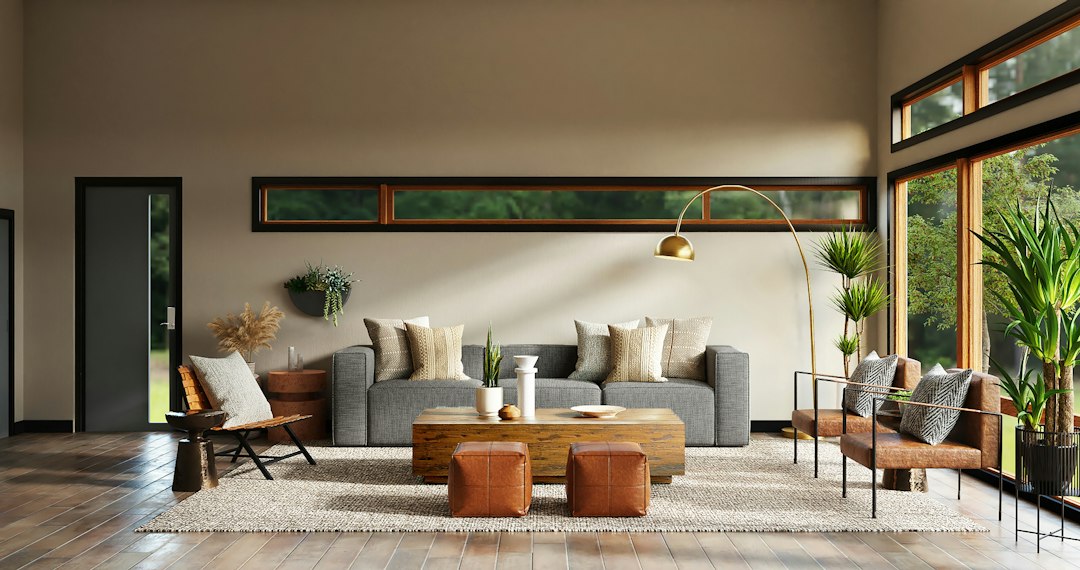
Begin with seating scale. Narrow rooms benefit from one modest sofa plus a lounge chair instead of a huge sectional; leave about 18 inches between seat and table for comfortable reach. A coffee table should be half to two-thirds the sofa length. Round tables soften tight walkways, while rectangular tables suit larger rooms and give structure.
Dress the focal wall intentionally. If you hang art, center the main piece and flank with negative space or a symmetric pair. Avoid a dozen tiny frames unless you build a clean grid and measure spacing. If a TV is your focal point, calm the area with symmetric storage and a long, low console. Use one large rug to unify seating; scattering small rugs chops the room into fragments.
Give every seat a surface and a light. A living room becomes more useful instantly when each chair has a side table or armrest tray and one lamp nearby. Add a soft throw for texture, then hold back. Keep pathways clear and avoid tight turns around corners. If in doubt, favor fewer, well-made anchors and let textures and light carry the interest. For families, add a concealed bin under the console for remotes and chargers so reset moments are easy.
Quick checklist for living rooms:
- Measure sofa and rug proportions before buying.
- Place one light source per seating cluster.
- Style the coffee table with four elements max.
- Hide cords and create a charging station inside a drawer.
- Group art or photos in a grid to reduce visual noise.
Bedroom clarity: a quiet headboard, smart nightstands, and wardrobe calm
The bedroom’s job is recovery and rest. Dress it with visual quiet and easy routines. Begin with the bed wall. A full-height headboard or a framed piece above the bed anchors the room and removes the “floating bed” effect. Keep nightstands within a few inches of mattress height, and leave room for lamps and one book. If the room is small, select nightstands with drawers and choose shades that soften light.
Bedding carries texture. A forgiving formula uses a neutral duvet, a textured blanket at the foot, and two pillow sizes (two standard, two Euro). This parcels softness without giving up visual calm. If you introduce color, keep it to one accent on the blanket or a cushion and let art or a plant repeat the hue elsewhere. For visual harmony, match wood tones across the bed, nightstands, and wardrobe, even if the pieces are from different sources.
Wardrobe calm is a dressing triumph. Closed doors save visual bandwidth during the day. Inside, use matching hangers and labeled boxes for seasonal items. A single mirror placed to catch daylight makes morning routines feel spacious. If floor space is tight, mount hooks behind the door for daily items. Add a small laundry station with two bags (lights/darks) so the room resets faster.
Bedroom checklist:
- Anchor the bed wall with a headboard or centered art.
- Keep nightstand tops clear with trays and minimal items.
- Choose two pillow sizes and one textured blanket.
- Match hangers and add labels to wardrobe bins.
- Use a full-length mirror near daylight to brighten mornings.
Kitchen and dining: clear counters, useful open shelves, and everyday table rituals
Kitchens dress best when counters are mostly clear. Limit the counter lineup to daily tools: kettle, coffee maker, one utensil crock, cutting board, and a fruit bowl. Everything else goes behind doors. If you want open shelves, curate them: plates stacked by color, glasses grouped, and one plant or cookbook as a soft note. Repeat a single metal finish on pulls and tap for unity.
Lighting layers matter here: a warm ambient source for evening, brighter task lights for prep, and a pendant over the dining table. The table itself benefits from a simple ritual—runner, vase or bowl, and a salt-and-pepper set—which keeps the surface in “ready mode” instead of becoming a catchall. Choose wipeable textiles, and if you’re in a rental, use tension rods for modest shelves inside tall cabinets.
Pantry and drawer calm keep the kitchen feeling usable. Clear bins with labels make inventory easy. Decant dry goods you use weekly; keep rarely used items behind a closed door or up high. In rentals, adhesive hooks inside cabinet doors hold measuring cups, mitts, or small pans. The aim is quick access, easy resets, and a scene that reads composed after normal days.
Kitchen and dining checklist:
- Keep 80–90% of counter space clear. Store extras behind doors.
- Curate open shelves with simple groupings and negative space.
- Set a daily table scene (runner + centerpiece + simple seasoning).
- Use clear bins and labels to track pantry staples.
- Repeat one metal finish across pulls and fixtures.
Entry and bathroom: hooks, mirrors, mats, and storage that earns its keep
Entries have one job: accept arrivals calmly and speed up departures. Begin with a mat that fits the threshold (larger is better, within reason). Place a narrow console or shelf where keys and mail land, add a bowl or tray, and mount hooks for bags and everyday coats. A mirror near the door catches light and helps departures feel composed. Label one bin per person for hats and gloves if you share the space.
Bathrooms dress simplest. Choose closed storage where possible; open shelves invite scatter. Keep counters to hand soap, a toothbrush cup, and one plant or candle. Store daily items in a drawer or caddy behind the mirror. Stick with one towel color so stacks read calm. If you add pattern, let it live on the shower curtain or bath mat as a single statement.
Lighting solves much of bathroom dressing. Aim for overhead light for general use and face-height light for grooming. A small night-safe accent light reduces harshness after dark. Matching or complementary metal finishes on fixtures prevent the mix-and-match look from creeping in.
Entry and bathroom checklist:
- Use a generous mat and a narrow landing shelf or console.
- Mount hooks for daily bags and coats; assign bins by person.
- Limit bathroom counters to a few necessary items.
- Store toiletries behind doors and keep one towel color.
- Layer light (overhead + face-height) for usability and comfort.
Small-space power: studio apartments and rooms that serve two jobs
In tight quarters, proportion and cohesion do most of the work. Choose a sofa with tall legs to show more floor; pick a pedestal dining table to improve passage; suspend lamps to free surface space; and mount hooks behind doors for items you grab daily. The aim is to trade bulk for height and visibility so sightlines stay long and clear.
- Zone with rugs: one rug per zone clarifies a studio’s plan without walls. Let the rug’s size suggest how many seats fit.
- Use screens or open bookcases: place a low, open shelf as a headboard to separate sleep and living zones without blocking light.
- Choose drop-leaf and nesting pieces: expand when guests arrive, collapse for daily flow.
- Store vertically: add shelves above doors and cabinets; use under-bed bins with labels.
- Repeat palette across zones: the same base colors reduce visual fragmentation and connect small areas.
For dual-purpose rooms, decide a primary function and dress for that first. In a guest-room-office, choose a slim desk and a daybed with deep drawers; add a task lamp, then one art piece that links both zones through color or shape language. Keep supplies behind doors so the room can change roles without friction.
Small-space checklist:
- Favor leggy furniture to increase visible floor.
- Pick foldable tables and stackable stools for flexibility.
- Mount storage above eye level and behind doors.
- Keep the same base palette across zones.
- Prioritize one function and hide the other when not in use.
Budget-wise sourcing: anchors, textiles, and the calm that comes with restraint
Money stretches when you buy anchors first and let small pieces follow. A stable rug, a comfortable sofa, a solid bed, and trustworthy lighting are investments you feel daily. After that, textiles provide more change-per-dollar than trinkets: cushion covers, throws, curtains, and bedding let you adjust mood without replacing furniture.
Mix new and used to cover more ground. Thrift and vintage markets yield wood storage, ceramic lamps, frames, and tables that age well. Online marketplaces are useful for larger pieces if you measure carefully. Shop with your brief in hand—palette, metal, wood, and texture rules—so you avoid impulse buys that don’t fit.
- Allocate budget: 60% anchors, 30% textiles and lighting, 10% accents.
- Buy fewer, better pieces: a well-made lamp often outperforms three cheap lights.
- Track purchases: a simple list prevents duplicate sizes and finishes.
- Rely on samples: order fabric and finish swatches before committing.
- Use restraint: pause after big buys and reassess needs before adding accents.
That restraint is itself a design move. When shopping slows, your rooms stop shouting. They read as composed, lived-in, and nimble—able to absorb a new plant, book, or piece of art without losing their tone.
Lighting, styling loops, and seasonal refresh: routines that keep rooms feeling cared-for
Lighting is the difference between a pretty room and a generous one. Use three layers when possible. Ambient light sets the baseline—overhead or bounced off a ceiling with a floor lamp. Task light focuses on activities: reading lamps near seats, desk lights at work surfaces, mirror lights at face height. Accent light adds mood and dimension: a small lamp on a shelf, LED strips behind a console, or candles for evenings (where safe).
- Warmth matters: choose bulbs around 2700–3000K for evening comfort; slightly cooler light near work areas during the day.
- Shade and reflection: fabric shades diffuse light; gloss or metallic surfaces reflect it for sparkle.
- Control: use dimmers or smart plugs to adjust light levels without rewiring—ideal for rentals.
- Distribution: avoid a single overhead source; it flattens faces and crushes texture.
Build a repeatable styling loop so projects don’t stall:
- Place anchors: rug, bed, sofa, table—measure and tape first, then commit.
- Add storage: doors and drawers for most items; open shelves only for curated things.
- Layer light: set an ambient baseline, then add task and accent where needed.
- Finish with texture and color: textiles, plants, art, and one meaningful object per surface.
Rooms don’t need constant makeovers; they benefit from small seasonal swaps and a few weekly habits. In spring and summer, lighten textiles (linen cushions, cotton throws, simpler bed stacks). In fall and winter, add wool, heavier weaves, and an extra blanket. Rotate plants for light, dust lampshades, and check bulb color consistency. A weekly five-minute reset—clear surfaces to four elements, fold throws, fluff cushions—keeps rooms feeling cared-for. A monthly edit—remove two accents from each room and put them in a labeled box—creates breathing space. An annual decision—replace one anchor you feel every day—moves the house forward.
If you’d like walk-through examples, measured layouts, and sourcing notes that match this approach, explore the archive at House Dressing on Joel Lives. It’s a practical starting point when you want to see the steps applied in real rooms.